
Directing Open-Ended Evolution in Artificial Life via Multi-Scale Path Divergence
Authors: Mikhail Akhtyrchenko, Mikhail I. Katsnelson, Andrey Ustyuzhanin
Paper: https://arxiv.org/abs/2606.17091
Code: N/A
Model: N/A
TL;DR
WHAT was done? The authors introduce Multi-Scale Path Divergence (MSPD, denoted as DP), a mathematically explicit, physics-grounded complexity metric inspired by the renormalization group. MSPD measures the temporal, multiscale organization of heterogeneity in the local transition laws of dynamical systems, functioning both as a gradient-free fitness function to direct open-ended evolution (OEE) and as a post-hoc diagnostic tool to analyze life-like behaviors.
WHY it matters? Open-ended evolution in Artificial Life (ALife) has traditionally relied on uninterpretable, black-box neural network drivers that lack connections to physical theories of complexity. By replacing learned embeddings with a principled, trajectory-level formula, MSPD bridges ALife with statistical mechanics, demonstrating that systems optimized for multiscale temporal structure naturally exhibit physical signatures of life—such as scale-dependent frustration and non-ergodicity—without being explicitly programmed to do so.

Details
The Uninterpretability Bottleneck in Artificial Life Evolution
A central goal of artificial life research is open-ended evolution, the sustained generation of novel forms and behaviors. While heuristic drivers such as novelty search and quality-diversity have successfully navigated search spaces, modern implementations have increasingly relied on black-box neural-network-based objectives, such as ASAL and Leniabreeder, which use deep vision-language models or learned autoencoder embeddings to assess “interestingness.” The critical bottleneck is that these models provide no physical insight, cannot be connected to statistical mechanics, and are highly sensitive to superficial visual changes rather than underlying system dynamics. Conversely, physics-grounded complexity metrics, such as Multi-Scale Structural Complexity (MSSC), are static and cannot capture the temporal evolution of dynamic processes. The primary contribution of this work is the temporal extension of spatial renormalization-group principles to evaluate local transition laws, providing a single explicit scalar that simultaneously optimizes for dynamical complexity and exposes its statistical-physical foundation.
Temporal Renormalization: Formulating State-Level Dynamical Heterogeneity
The mathematical formulation of MSPD begins by defining a configuration space. We let (I,BI) be a measurable index space for local degrees of freedom, such as a lattice site in a cellular automaton or an individual particle in a multi-agent system. A configuration is represented as a map x:I→E, where x(i) is the local state of degree of freedom i within the state space E. The system’s time-Δt dynamics are governed by a Markov kernel PΔt:X×BX→[0,1], which specifies the probability law of the subsequent configuration. For a current configuration x and a component i∈I, the map Gx,i(y)=(x(i),y(i)) yields the before-after local state pair when the next configuration is y. The local transition law TiΔt(x) is then defined as the pushforward measure under Gx,i: TiΔt(x)=(Gx,i)#PΔt(x,⋅)∈P(E×E) When E is a vector space, we can alternatively define local increment laws ViΔt(x) using the difference operator
To measure how much different parts of the system disagree in their local dynamics, the authors define state-level dynamical heterogeneity HΔt(x) as the double integral comparing the transition laws of two components sampled via mx:
where D represents a distance metric between probability measures, and mx is a sampling measure encoding the contribution and weight of local degrees of freedom. This state-level heterogeneity serves as the atomic unit for constructing the temporal, multi-scale trajectory trace.
The MSPD Pipeline: From Lagrangian Tracing to Scale Sensitivity
To compute MSPD along a realized trajectory, the system utilizes a multi-step pipeline as shown in Figure 1.
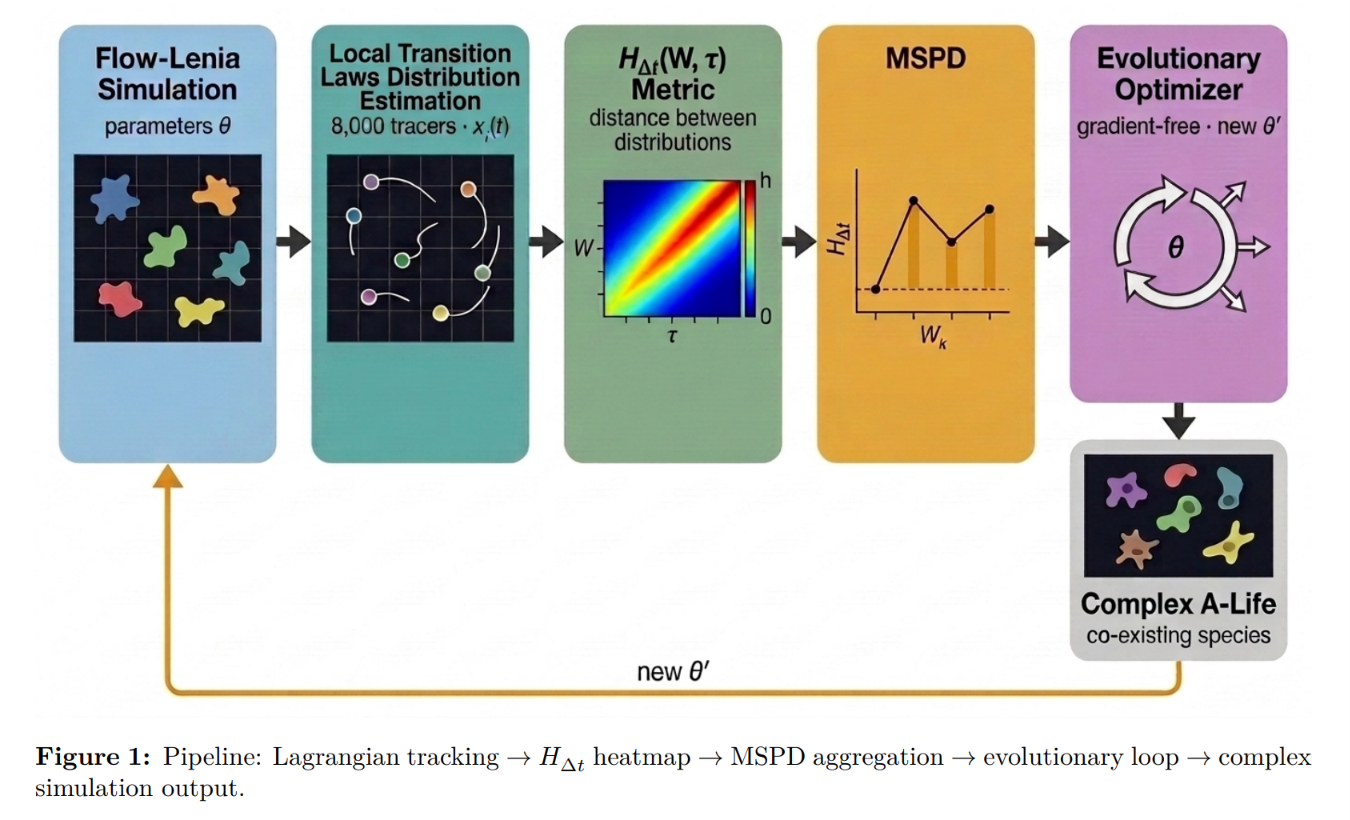
As a running example, consider a continuous particle system such as Particle Life++ (neural-network-mediated pairwise particle interactions). First, the system tracks individual particles through time (Lagrangian tracking), outputting their spatial coordinates over a trajectory. Second, over a finite observation window Ik=[ak,ak+s] of duration s, the local coordinates are logged at a temporal resolution or lag τ. The empirical transition law L̂ξi,k,τ of particle i is calculated as a uniform distribution over the observed displacements:
where qi(t) represents the coordinates of particle i at time t, and Ik,τ is the set of valid start times within window Ik. Third, the pairwise distance between the transition laws of all active particles is computed using the Sliced Wasserstein-1 (SW1) distance, yielding the empirical pairwise heterogeneity H̑k. To correct for finite-sample biases, a pooled-null baseline H̑k0 is subtracted, producing the null-corrected empirical heterogeneity ΔH̑k=H̑k−H̑k0. Fourth, the resulting trace is processed through a preprocessing function ϕ (such as clipping or flooring) to yield the windowed trace h⋆k,τ=ϕ(ΔH̑k). Finally, the trace is passed through a discrete temporal coarse-graining operator Cr_j at multiple scales R={r1,…,rJ}, measuring scale sensitivity by computing how much the trace changes under successive coarse-graining steps. This yields the final MSPD score, which closed-loop evolutionary optimizers use as a fitness function to discover complex, co-existing species (Figure 1).
Algorithmic Synthesis: Optimizing across Diverse Substrates
The primary objective function optimized during evolutionary search is the finite-grid MSPD functional:
where a=(a1,…,aK)∈RK is the window-indexed heterogeneity trace, R={r1,…,rJ} is the ordered scale grid with rj+=rj+1, Cr_j is the discrete coarse-graining operator, Ur_j is the reconstruction operator mapping the trace back to the grid of Cr_j, wj are scale transition weights, and ηMSPD is a positive floor parameter that prevents division by zero and normalizes small residual fluctuations.
For continuous substrates like Particle Life++, the state updates are governed by the following equations:
where xin, vin, and cin represent the position, velocity, and color vector of particle i at step n, Δt is the timestep, h is the damping half-life, m is the particle mass, Fin is the accumulated pairwise mechanical force, and ċin is the accumulated color drift rate.
To optimize these systems, the authors utilize Sep-CMA-ES, a covariance matrix adaptation evolution strategy. A major engineering challenge is that random neural parameters in Particle Life++ often settle into low-motion stationary basins, yielding narrow displacement laws and suppressing both heterogeneity and MSPD. To force the optimizer out of these trivial basins, the authors introduce a joint objective function minimizing
where λH provides a positive regularization weight on the mean-heterogeneity trace, ensuring the search algorithm prioritizes dynamic, moving systems.
Empirical Evidence: Separating Noise from Living Heterogeneity
To validate that MSPD specifically isolates structured temporal complexity from raw motion or static noise, the authors evaluate the metric against a controlled synthetic calibration suite consisting of families S0–S8 (Table 3, Figure 13) (but where’s S2?).
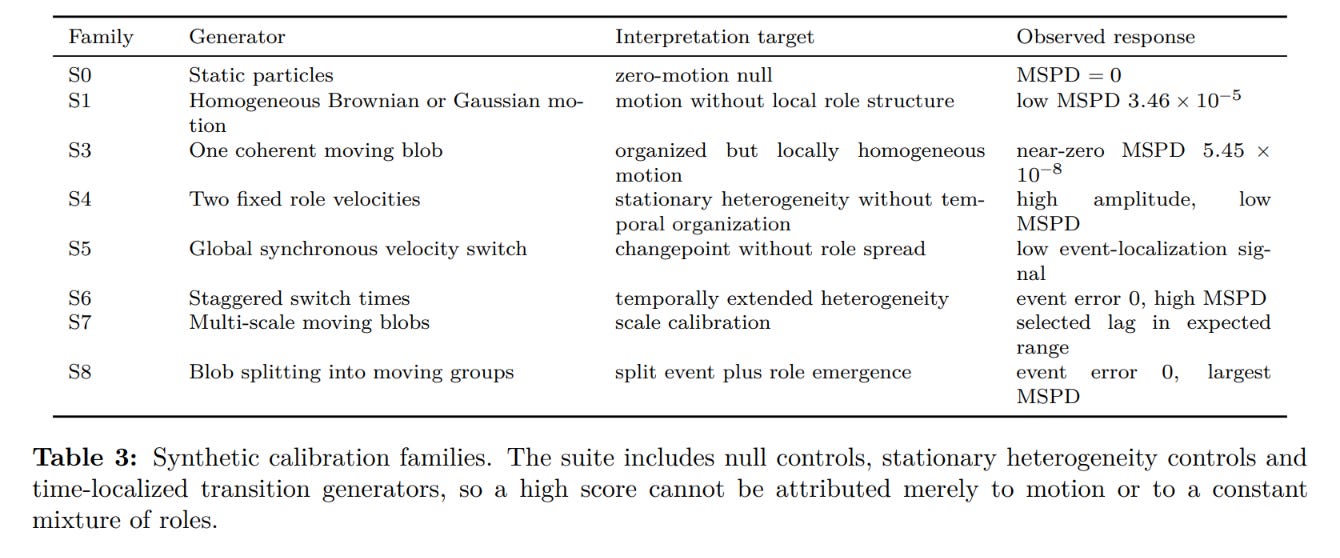
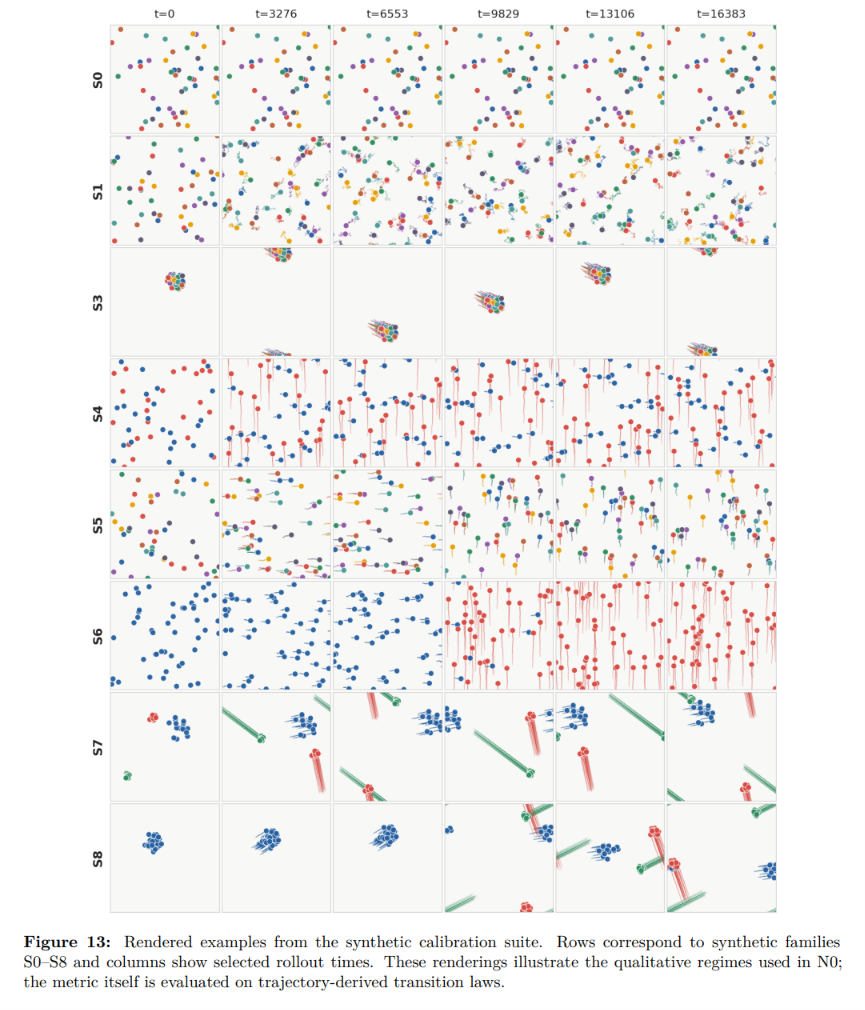
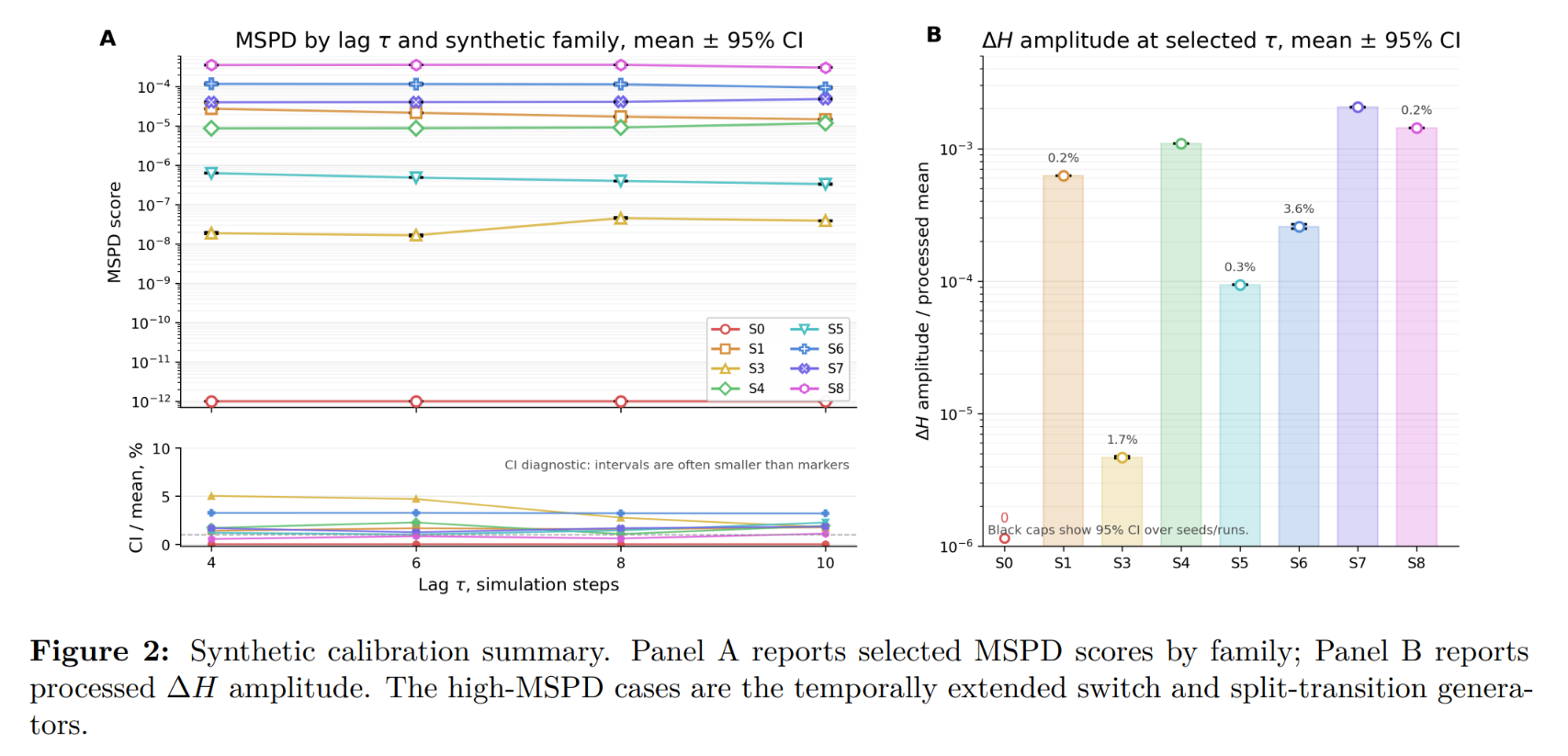
Crucially, S0 (static particles), S1 (homogeneous Brownian motion), and S3 (a single coherent moving blob) all receive near-zero MSPD scores (S1: 3.46×10⁻⁵, S3: 5.45×10⁻⁸), despite containing significant kinetic energy or spatial coordination. This confirms that coherent object motion is not mistaken for complexity. In contrast, family S8 (a blob splitting into distinct moving groups) and S6 (staggered switch times) produce the highest MSPD scores, demonstrating the metric’s selective sensitivity to temporally organized transitions and emergent roles (Figure 2, Figure 3).
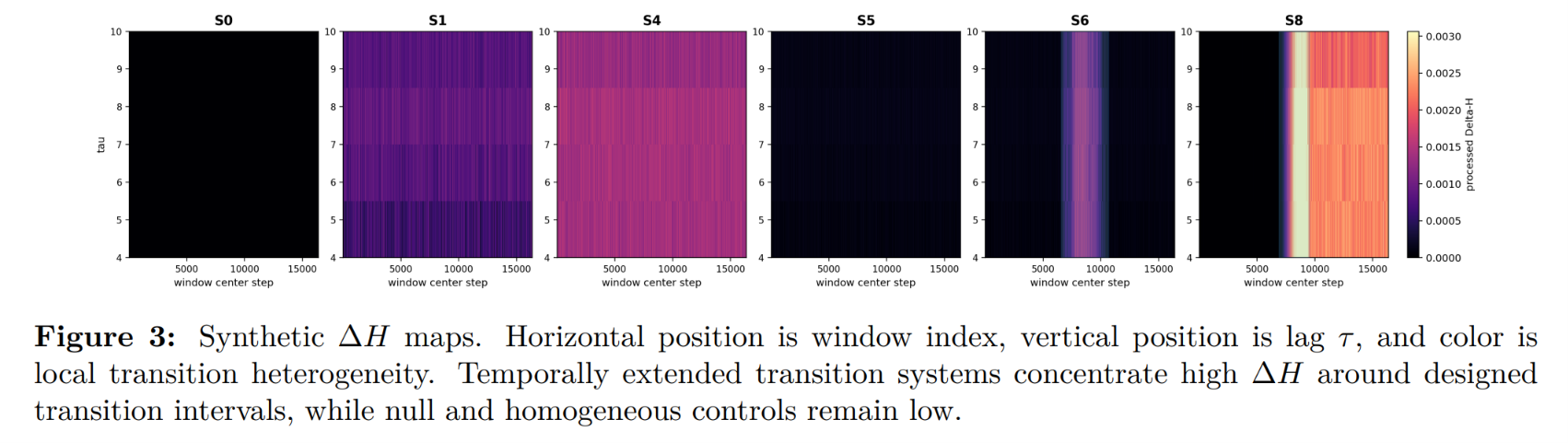
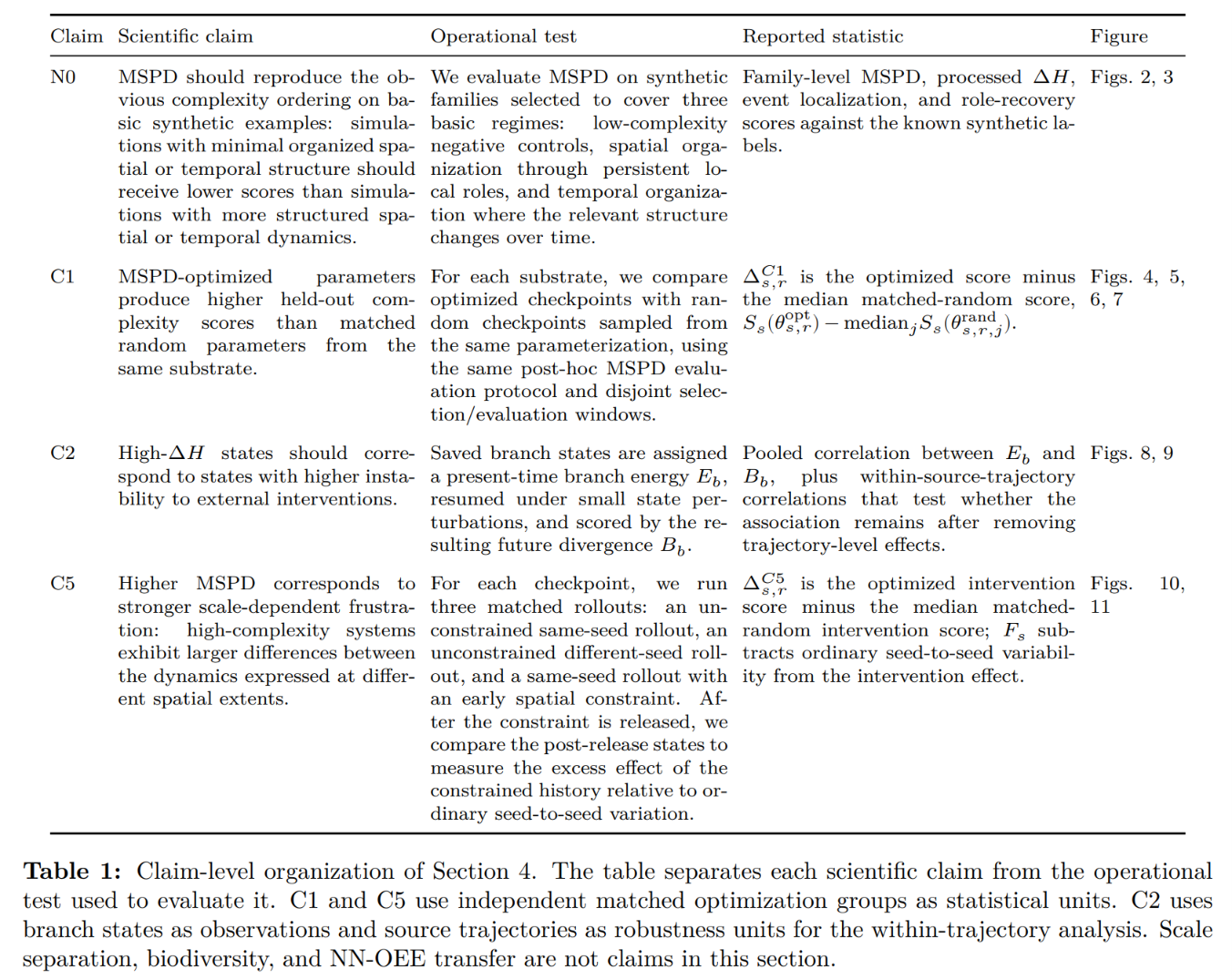
In parameter optimization trials against matched random controls (Table 4), MSPD successfully identifies and isolates highly organized regimes. For Particle Life++, all 7 out of 7 optimization groups show a statistically confirmed increase in held-out MSPD over their matched controls (median contrast 0.00267, p=0.0078).

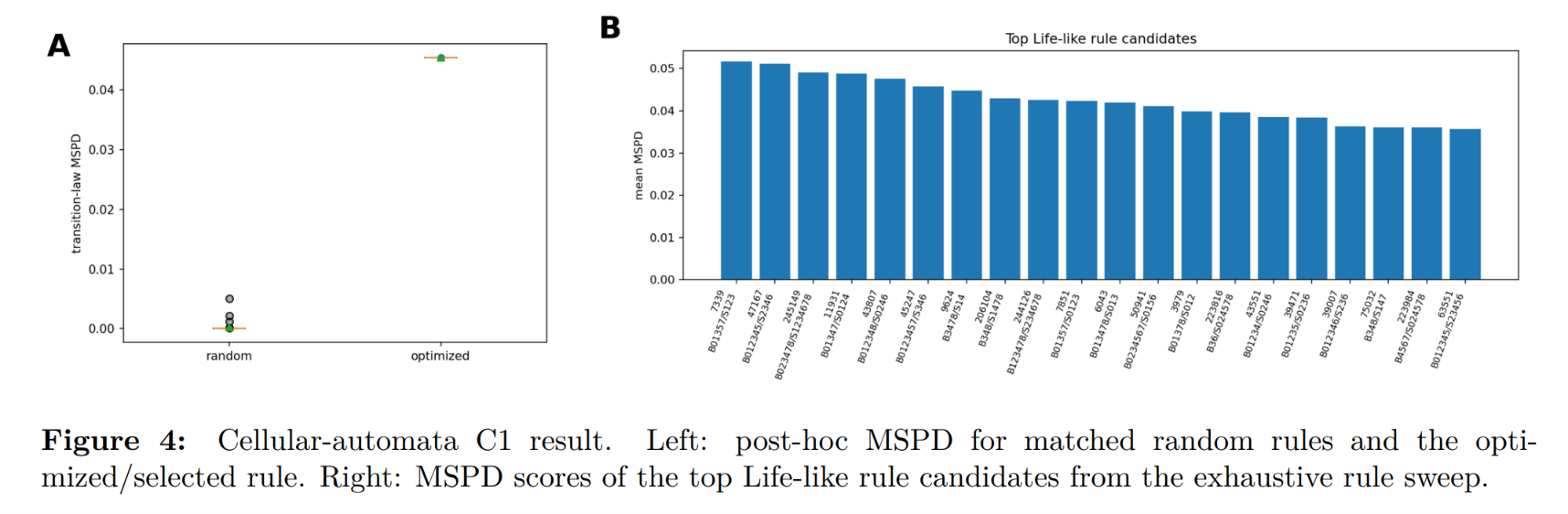
For Cellular Automata, the optimized totalistic rules are clearly separated from random controls (Figure 4).
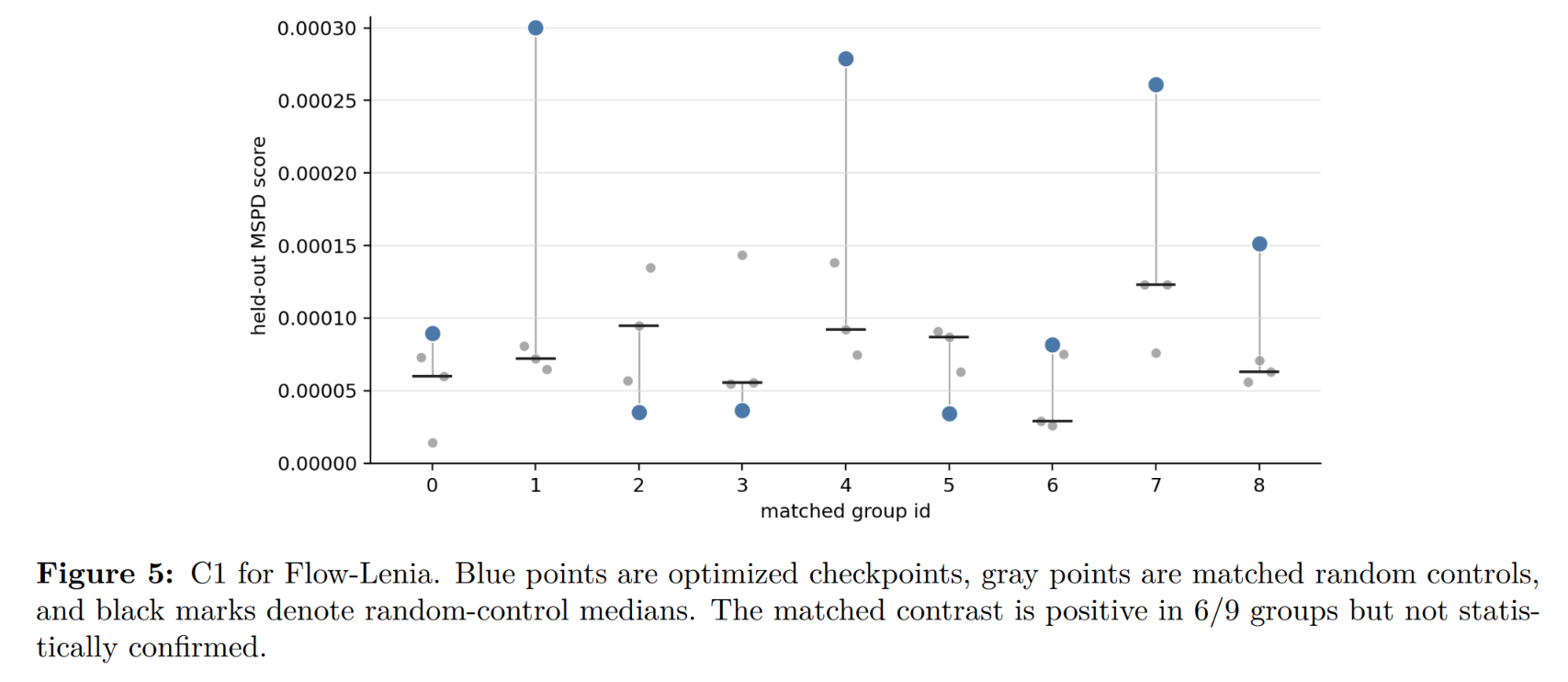
While Flow-Lenia optimization yields positive contrast in 6 out of 9 groups (Figure 5), it is not statistically confirmed (p=0.254), a result the authors attribute to evaluation noise under a tight computational budget rather than a fundamental limitation of the metric.
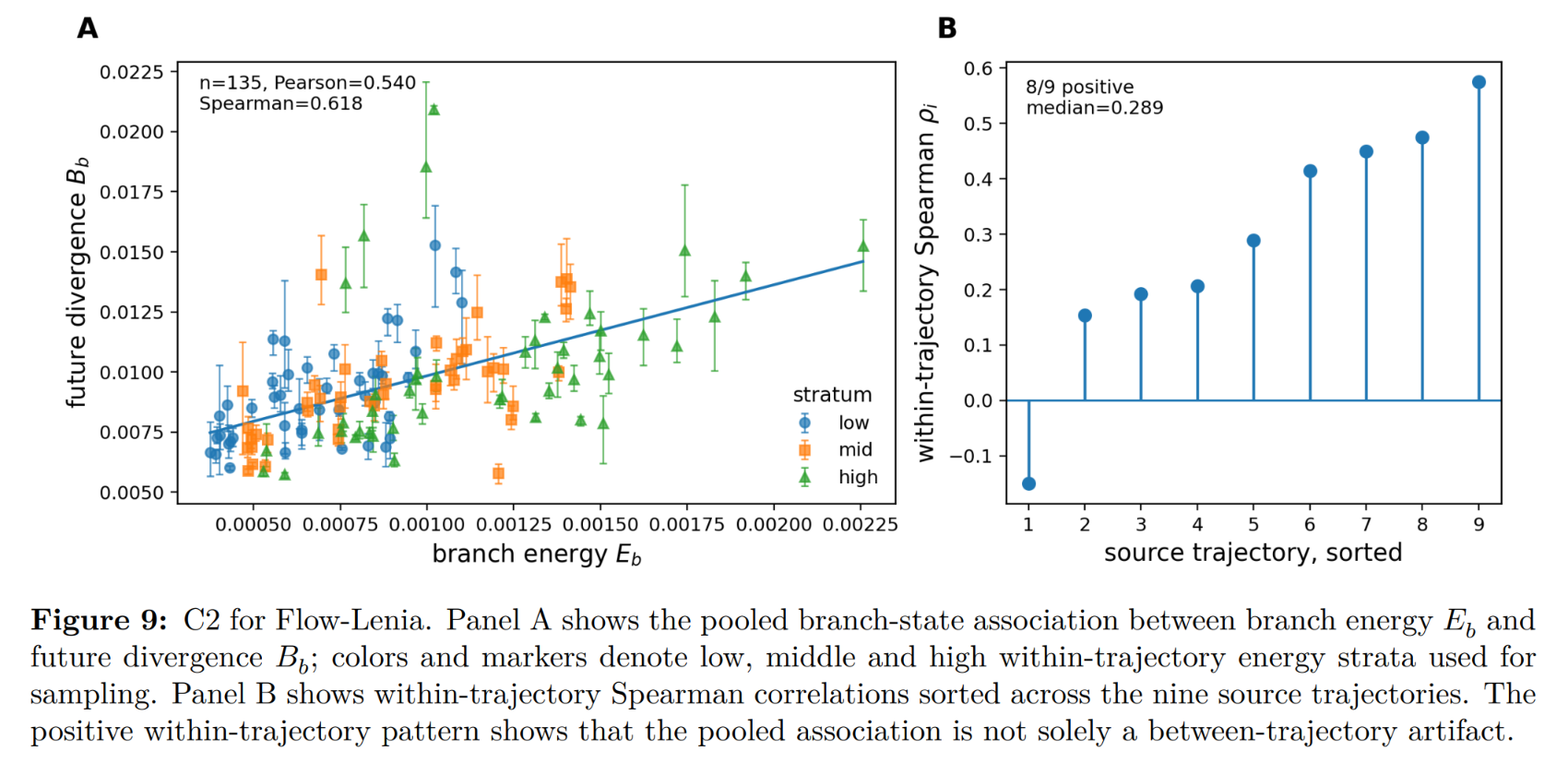
Mechanistic probing reveals that MSPD successfully links to the physical properties of biological systems. State perturbation experiments (C2) show that locally elevated heterogeneity (ΔH) acts as a detector for dynamical bifurcation points. For Flow-Lenia, there is a robust positive correlation between present-time branch energy Eb and future divergence Bb under small perturbations (Pearson r=0.540, Spearman r=0.618 over n=135 states), confirming that high-heterogeneity states are highly sensitive to external interventions (Figure 9).
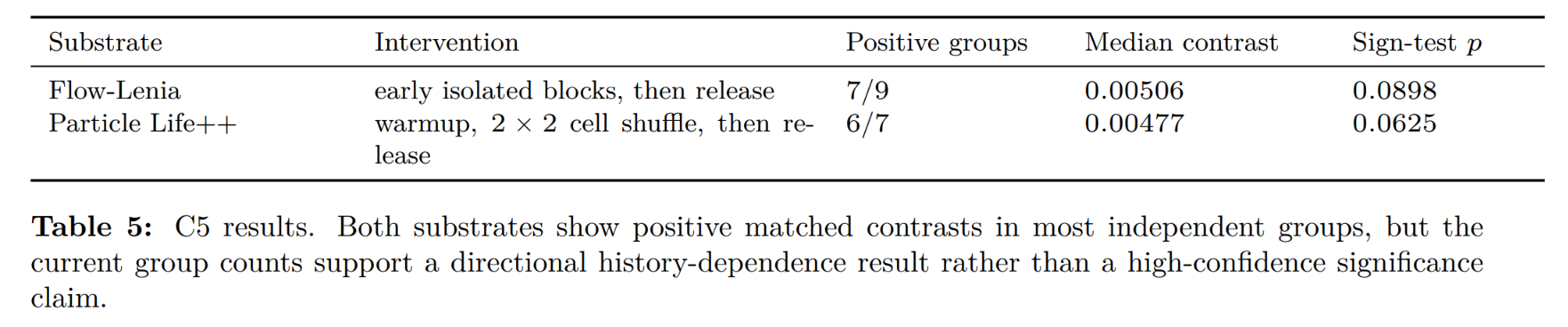
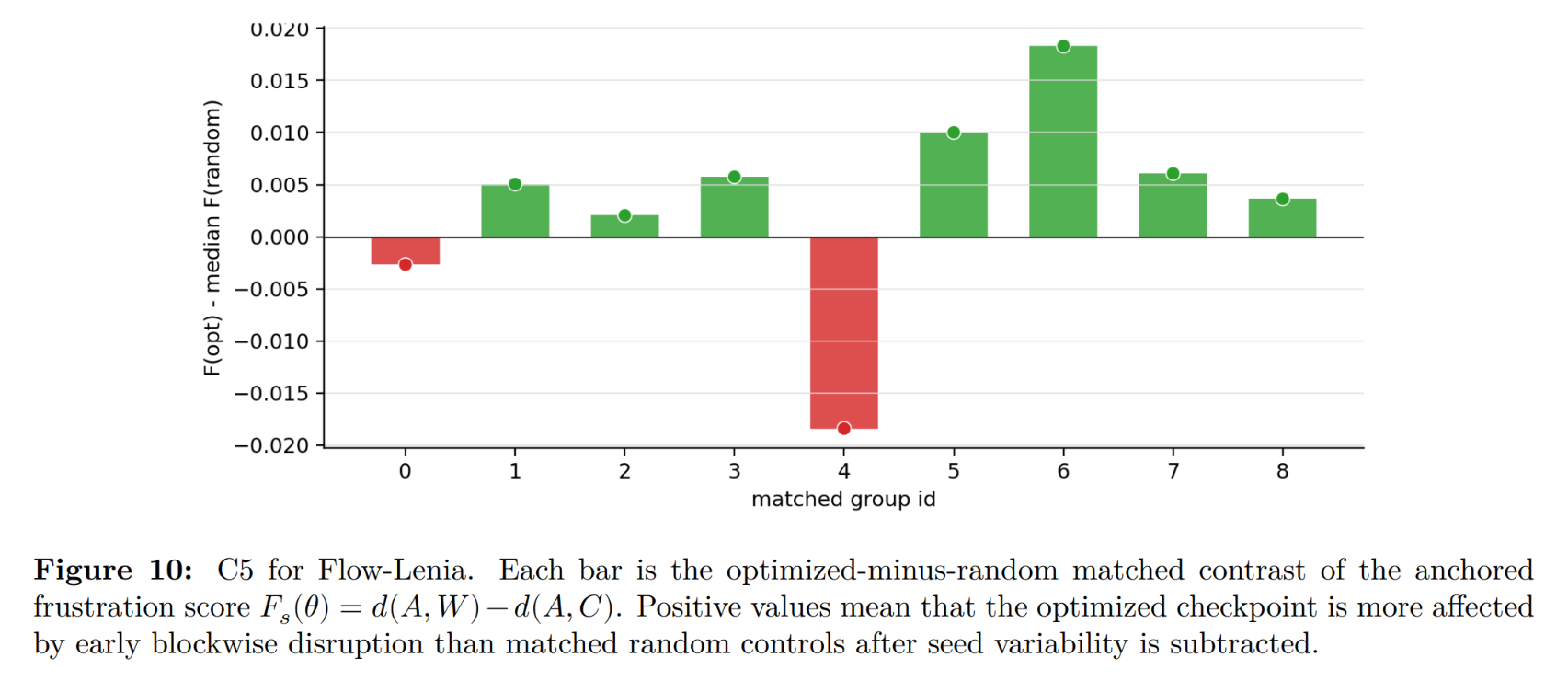
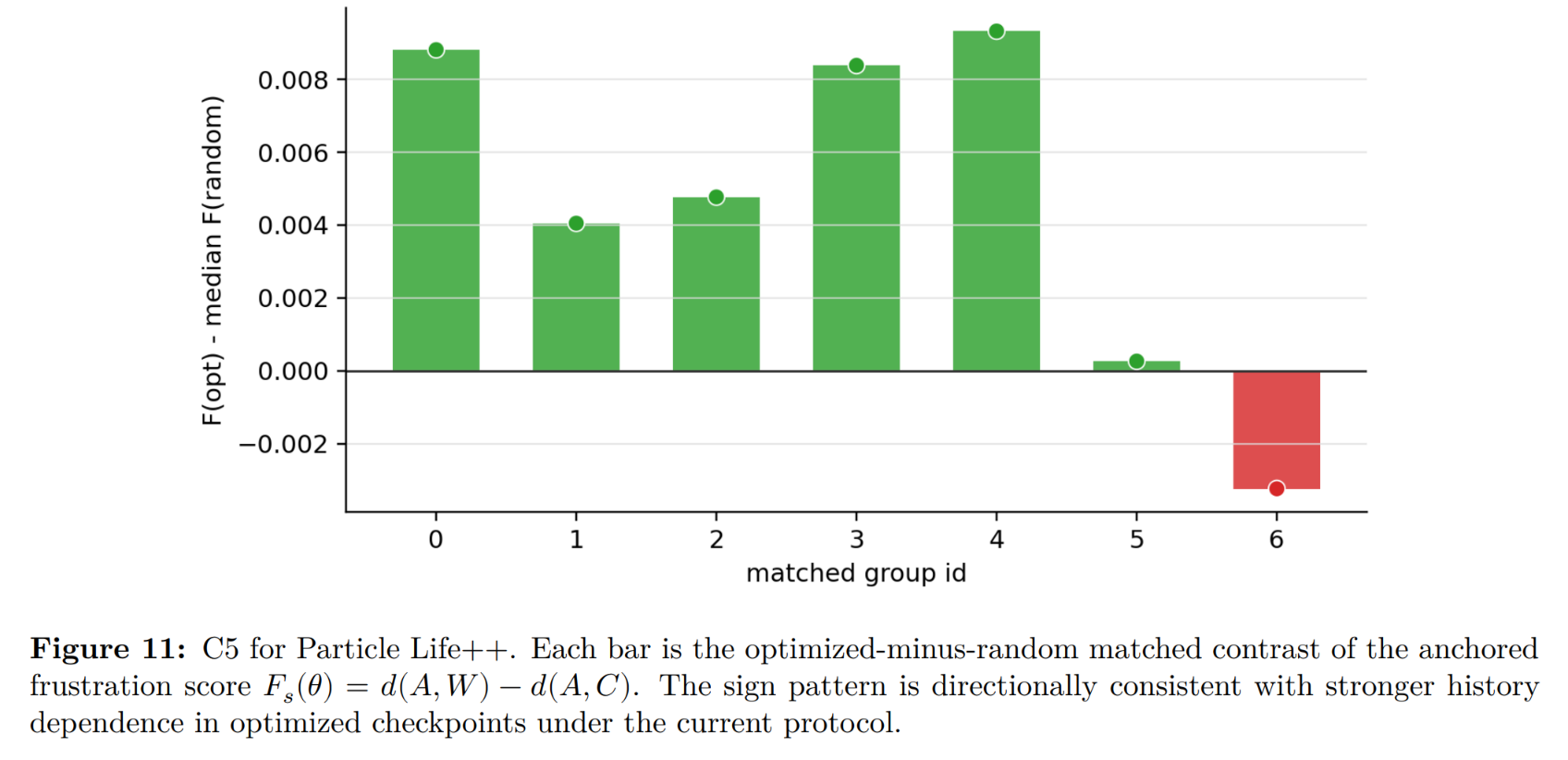
Furthermore, early spatial constraint experiments (C5) show that MSPD-optimized systems exhibit elevated scale-dependent frustration, with Flow-Lenia showing positive matched contrasts in 7 out of 9 groups (p=0.0898) and Particle Life++ showing positive contrasts in 6 out of 7 groups (p=0.0625, Table 5, Figure 10, Figure 11).
Deepening the Physical Foundations of Complexity
The MSPD framework stands on the shoulders of classical statistical physics and modern open-ended evolution drivers. It directly inherits its renormalization-group architecture from MSSC but addresses its static limitation by replacing spatial coarse-graining with temporal observation windows. Unlike neural-network-driven open-endedness drivers like ASAL or Leniabreeder, which use black-box perceptual metrics, MSPD uses a closed-form formula based on optimal transport theory and Sliced Wasserstein distances. This mathematical formulation allows MSPD to interface with physical theories of life, specifically the frustration/non-ergodicity criteria of biological complexity proposed by Vanchurin et al. and Wolf et al. (inspired by spin glasses). The paper’s key contribution to this literature is demonstrating that scale-dependent frustration—where a system’s dynamics are altered under spatial constraints because it cannot explore its rugged state-space landscape—emerges naturally as a downstream consequence of optimizing for multiscale temporal organization in continuous substrates like Flow-Lenia, Lenia, or Particle Lenia.
Structural Weaknesses: Stationarity Assumptions and Underpowered Trials
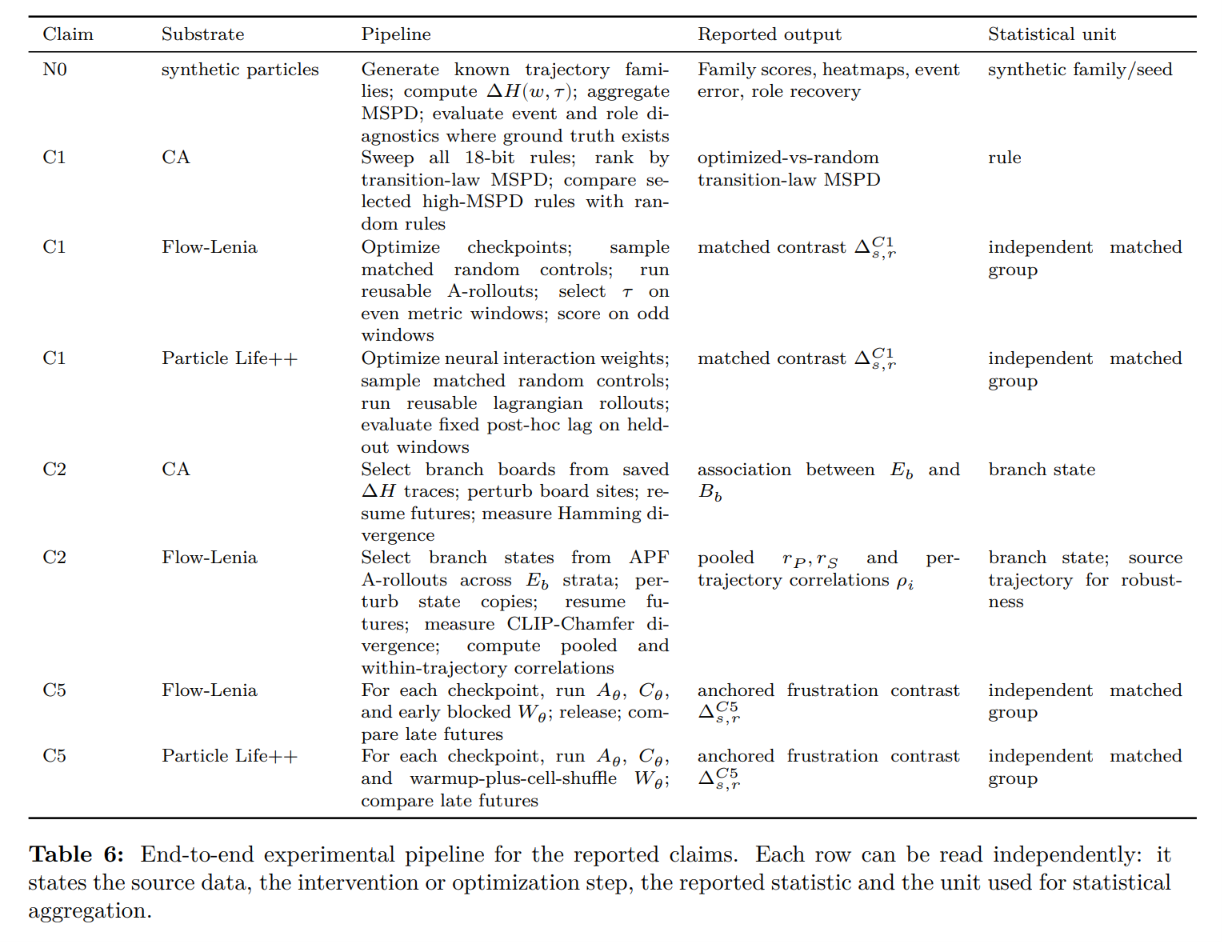
Despite its theoretical elegance, MSPD has several critical limitations. First, the consistency of the windowed estimator (Propositions 1 and 2) relies on the assumption of within-window stationarity of local transition laws. In regimes characterized by abrupt, highly localized phase transitions—such as the nucleation of a new structure or the sudden collapse of a basin—this stationarity assumption is violated, causing the empirical estimator H̑k to mix pre- and post-event statistics, which introduces an unquantified bias that may attenuate optimization signals. Second, the continuous-parameter optimization experiments suffer from low statistical power due to a modest number of independent runs, meaning that fine quantitative claims regarding effect sizes and substrate-specific exponents remain underpowered. Finally, the cross-substrate evaluation matrix is incomplete (Table 6), leaving transfer experiments such as C5 on Cellular Automata and C2 on Particle Life++ to future work; the latter is particularly obstructed by the deep-attractor structure of the Particle Life++ substrate, which causes perturbed trajectories to rapidly relax back to their pre-perturbation states.
Verdict: A Mathematical Compass for Emergence
This work provides a compelling, mathematically rigorous alternative to black-box open-endedness metrics, establishing a direct connection between Artificial Life and statistical mechanics. MSPD acts as a reliable mathematical compass that guides dynamical systems toward self-organizing, lifelike behaviors without requiring handcrafted or learned perceptual metrics. For researchers working on active matter, multi-agent coordination, and unsupervised representation learning, MSPD offers a valuable tool. Future work addressing its computational scalability, defining a system-identified scale-separation timescale τ⋆, and exploring multi-objective optimization that combines MSPD with complementary snapshot-structural metrics will be crucial to unlocking the full potential of this framework.